
"You're only breathing into the top third of your lungs."
Most leaders in trouble aren't broken. They're partial. Somewhere back there they cut off a part of themselves that once felt dangerous, and got so good at moving without it they mistook the limp for a stride. Here's what that costs a person, a leader, and a business, and how to go back for what got left behind.

We Are Building a Generation That Skipped the Fundamentals
I spent years in architecture school drawing by hand. Not designing. Drawing. Copying masters until my hand knew what my mind was still learning. That progression: repetition, copy, reproduce, combine, original voice … is how creative mastery actually forms. AI is collapsing the first three stages entirely. And nobody is talking about what we are building on top of a foundation that was never laid.

I Trained for Ironman Alone. I’m Climbing to 14,000 Feet With a Group of Men.
For years my training looked the same. Up before dawn. Head down. Alone. Twenty hours a week building toward a race that would come down to one person and one finish line. Ironman is like that. This summer I am heading into the Eastern Sierras with a group of men from the Wineland community to summit Mount Sill at 14,160 feet. The training is similar. Everything else is different.
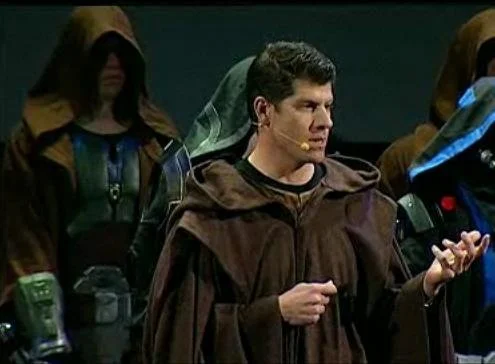
Three Thousand People. One Jedi Robe. One Word.
have a significant fear of public speaking. I was standing in the wings of a stage at one of the biggest game launches in Star Wars history, about to walk out in front of thousands of people dressed as a Jedi. The only thought in my head was one word. Breathe. That word is the whole philosophy.

The Pit
I looked completely fine. Calm. Poised. The one who held the room together. What nobody could see was the pit in my stomach — the ache I could not breathe through, the fear I had no name for yet. I had built armor so thoroughly I had forgotten it was armor. What I did not understand then is what I know now: the armor that keeps people from seeing in also keeps the fear from getting out.

The First Thing I Do When I Walk Into Any Organization
I had just joined IGT as SVP and Head of Global Studios. It was the world's leading slot machine manufacturer. It was also a company in serious trouble. Before I presented a single plan or changed a single thing, I traveled to every studio on every continent and asked hundreds of artists, designers, and engineers the same three questions. What came back changed everything - and it was not what most leaders would have thought to ask for.

Your AI Strategy Is Only as Good as Your Answer to This Question
The CEO had slides. Bullet points. A vendor shortlist. A timeline. He had been building toward this meeting for weeks. I let him finish. Then I asked him one question. Why? Not why AI. Why now, why this way, what is the actual goal. He looked at me the way people look when they realize the question they prepared for was not the question they were going to get. That moment tells me everything I need to know.

The Universe Creates the Moment. You Choose the Lesson.
In the span of a few months, my company imploded, my marriage of thirteen years ended suddenly, and I received a cancer diagnosis. I was on the floor. Literally and figuratively. What I know now is that none of it was random. And I would not trade any of it.
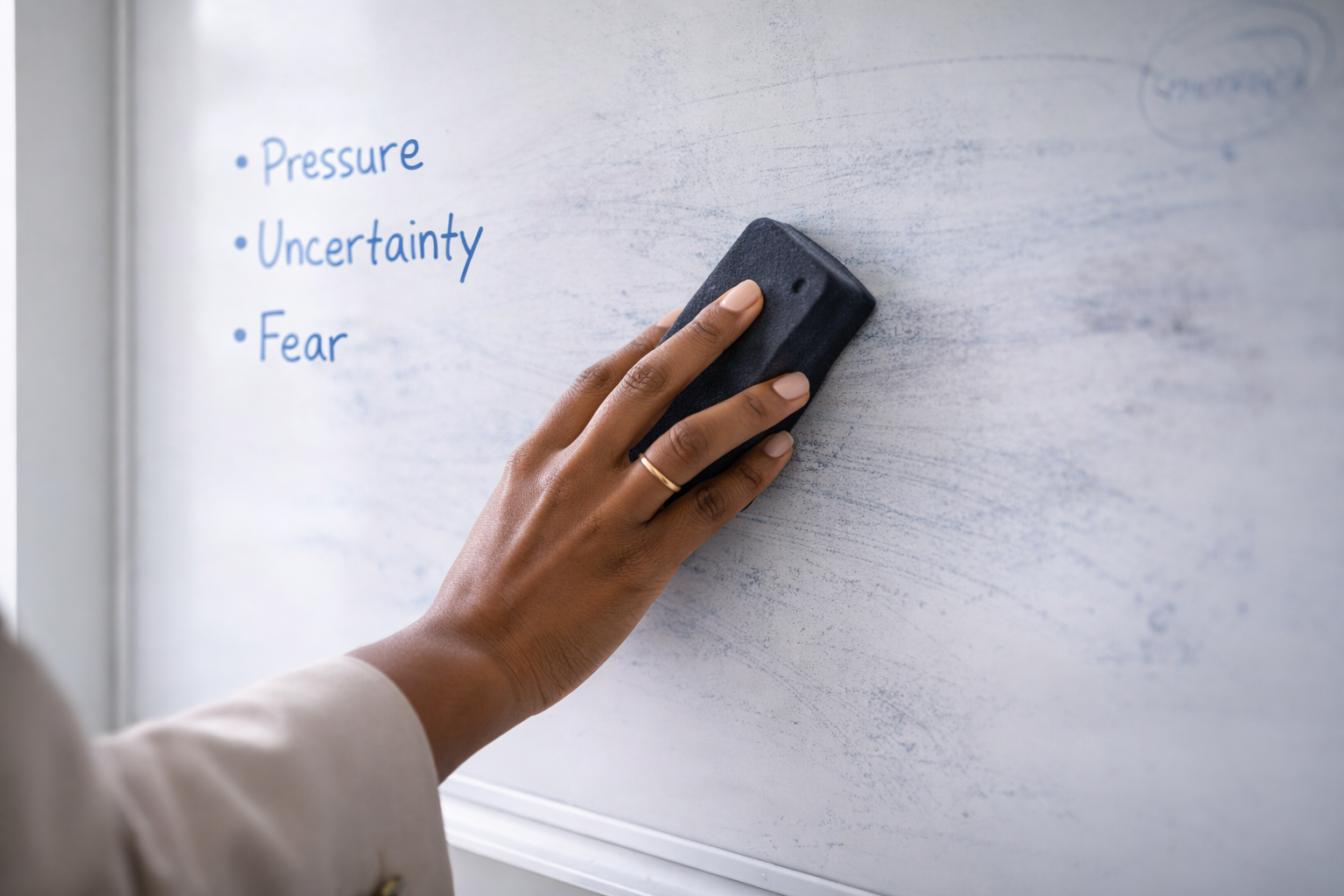
The work you avoid shows up in your leadership
You don’t leave your patterns at home when you walk into work. Leadership under pressure reveals how you actually think, react, and decide. The biggest constraint for many leaders isn’t strategy, it’s the unexamined patterns shaping their behavior.

The hidden cost of independence in leadership
Most leaders are rewarded for carrying everything alone, but over time that strength quietly turns into isolation, slower decisions, and unnecessary weight

The Hidden Cost of Indecision in Leadership
Indecision doesn’t slow teams immediately. It erodes them over time.

From Fear to Resilience: How Taking the First Step Changes Everything
Fear does not disappear before action.
We move forward with it, one step at a time.

The difference between advice and partnership
Advice reacts to ideas. Partnership carries outcomes.

Strong leaders still need a place to think out loud
As responsibility increases, the space to think out loud shrinks.
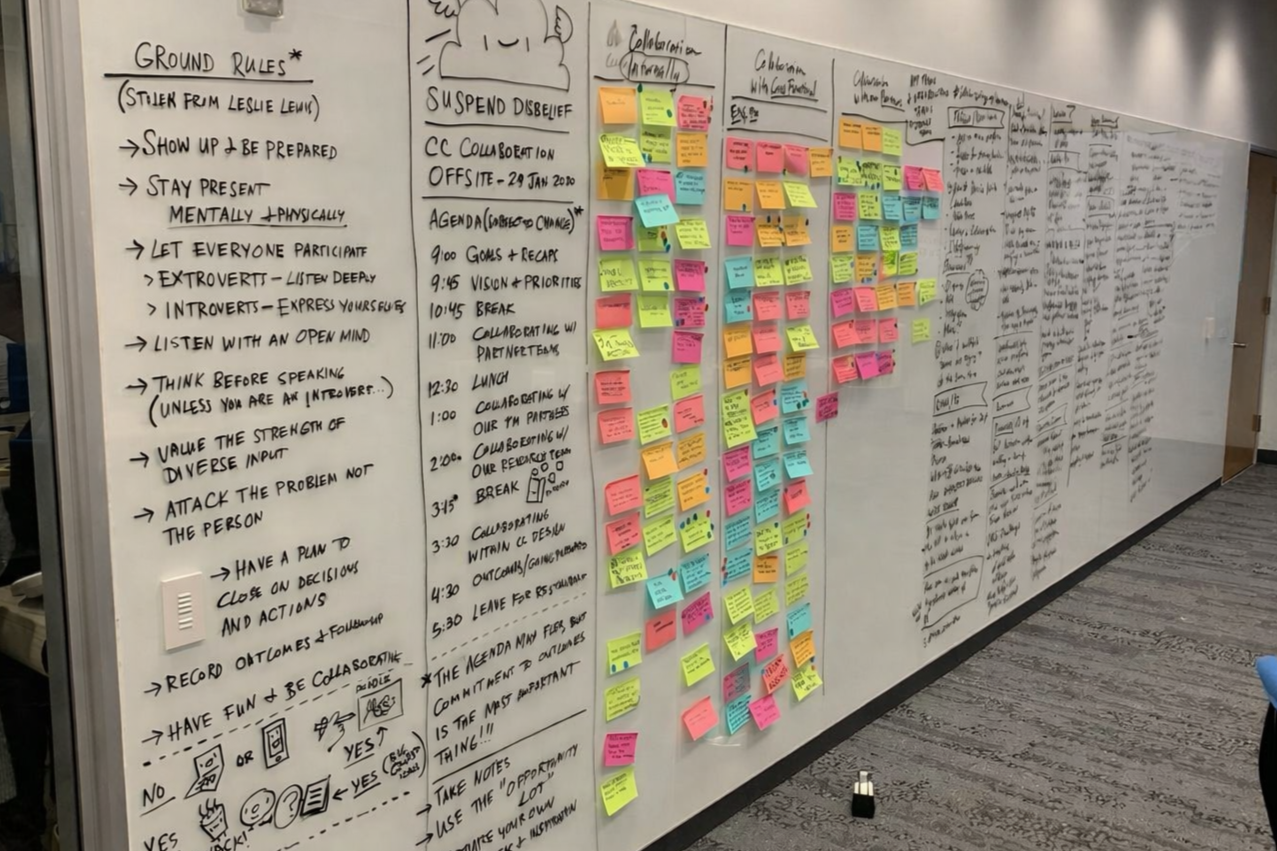
When everyone owns it, no one does
Shared ownership often creates friction, not collaboration.

Why smart teams stall after a pivot
Most teams don’t stall because the strategy is wrong. They stall because the organization never finished the pivot.

What I look for in the first 30 days with a leadership team
The first 30 days with a leadership team are not about fixing everything. They are about seeing clearly.

When capable people are suddenly on the sidelines
Layoffs are no longer a reflection of performance. They are a reflection of timing, capital cycles, and shifting priorities. What follows is often harder than the job loss itself, the self-doubt, the pressure to rebrand your story, and the quiet question of what still fits. This moment is less about replacement and more about recalibration, especially for experienced leaders navigating a long search or an unexpected pause.

Why Authenticity, Wholeness, and “Enough” Matter More Than Ever
In a time of mass layoffs, political uncertainty, and widespread identity disruption, it’s easy to question your place, your value, and what any of it really means. When roles disappear and familiar structures start to wobble, many people discover how tightly their sense of worth was tied to titles, outcomes, and external validation. True leadership, especially in moments like this, is not about position, productivity, or performance. It’s about wholeness.
Inspired by Blake Mycoskie and the Enough movement, this reflection explores what it means to lead from the inside out. It looks at authenticity, inner alignment, and the quiet work of remembering that your value was never earned by a role, a paycheck, or a résumé. This is an invitation to pause, to reconnect with what’s essential, and to lead from a place that remains steady even when the external world is in flux.

In Liminal Space: Reinventing Yourself After Success, Setbacks, and Industry Change
There was a time when my identity was clear. Athlete. Executive. Builder of large, visible things. And there were moments after that when none of those labels applied.
Most accomplished leaders eventually find themselves in a liminal space, the in-between. It can arrive after success or failure, through personal choice or forces far beyond our control. Industries shift. Companies change. Roles disappear. What once defined us no longer fits.
This space is uncomfortable, but it is also fertile. It is where reflection sharpens, where what truly matters comes back into focus, and where reinvention begins. The leaders who emerge stronger are not the ones who rush forward blindly, but the ones who pause, breathe, and design what comes next with intention.
If you are here now, you are not lost. You are standing at a threshold. And what comes next matters.